
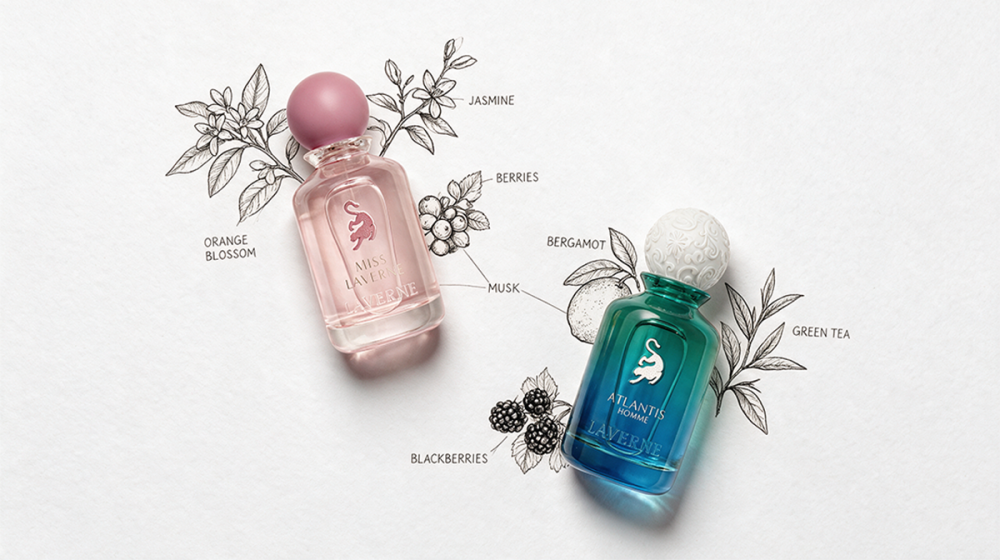
What Do Top, Heart, and Base Perfume Notes Mean?
A fragrance may open with a clear, bright impression and feel warmer or more grounded later in the day. That shift does not mean the scent has lost its identity. It means its structure is unfolding.
Understanding perfume notes helps explain why the first spray is not the complete fragrance. It also makes online perfume shopping in Saudi Arabia clearer, especially when you cannot test every scent before ordering.
Rather than treating notes as an ingredient list, it is more useful to read them as a timeline: what appears first, what forms the main character, and what remains after the opening becomes quieter.
Why do people search for perfume notes?
The question often begins with surprise.
A perfume smelled fresh in the first few minutes but became woody later. A scent felt different on another person. A warm base appeared sooner outdoors than it did in an air-conditioned interior.
The searcher wants more than a definition. They want to understand scent evolution and reduce the chance of choosing a fragrance based on a stage that does not last.
Perfume notes are not three disconnected stages
Fragrance descriptions commonly divide a composition into:
- Top notes.
- Heart or middle notes.
- Base notes.
These layers overlap. The opening recedes as the heart becomes clearer, and the heart continues to shape the scent while the base settles.
The fragrance pyramid is therefore a guide to movement, not an exact schedule.
When is understanding perfume notes useful?
It is particularly useful when:
- Buying perfume online in Saudi Arabia.
- Choosing a daily fragrance for work.
- Looking for an evening perfume.
- Buying for an occasion that lasts several hours.
- Comparing fragrances within one family.
- Selecting a perfume gift.
- Trying to understand why a scent changed on skin.
- Choosing for warm weather and air-conditioned spaces.
How warm weather may affect scent evolution
Warm conditions may make faster-moving materials feel more immediate and may bring the transition toward the heart and base forward.
This does not create one fixed timeline. Skin chemistry, humidity, fabric, application, and the indoor environment all affect perception.
A fragrance tested outdoors may therefore unfold differently from the same scent experienced in a cooled room.
The practical lesson is simple: do not judge a perfume only from its first few minutes.
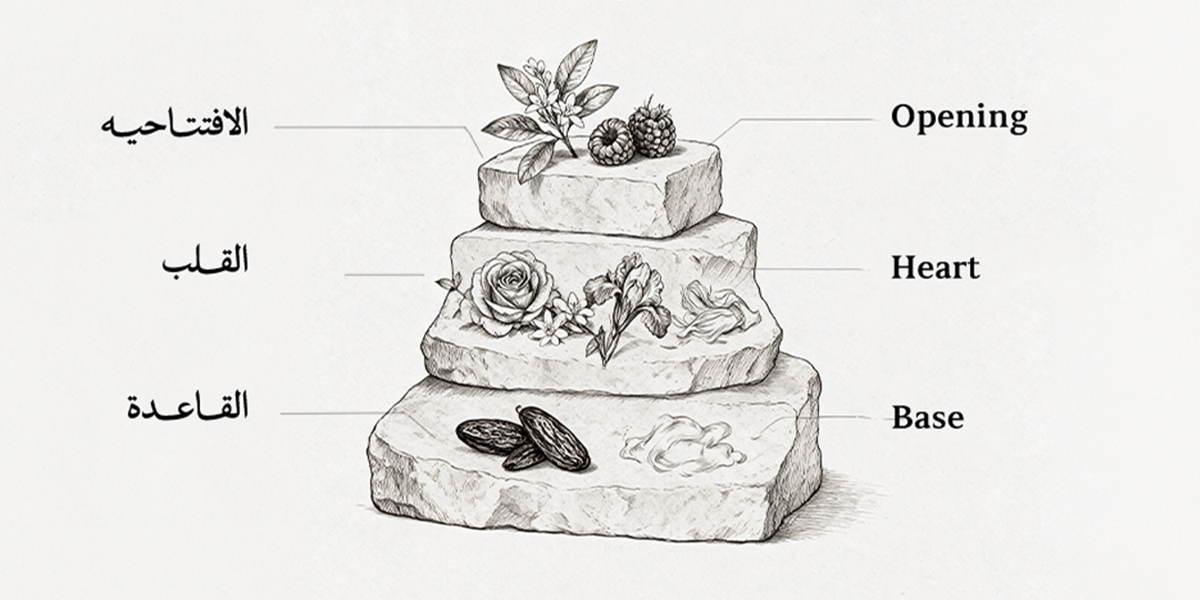
How does the fragrance pyramid work?
The pyramid places top notes at the upper level because they are noticed first.
Heart notes sit in the middle because they form the central character after the opening softens.
Base notes sit at the bottom because they support the composition and shape the final dry-down.
This model explains order and role. It does not promise an exact number of minutes or hours for each layer.
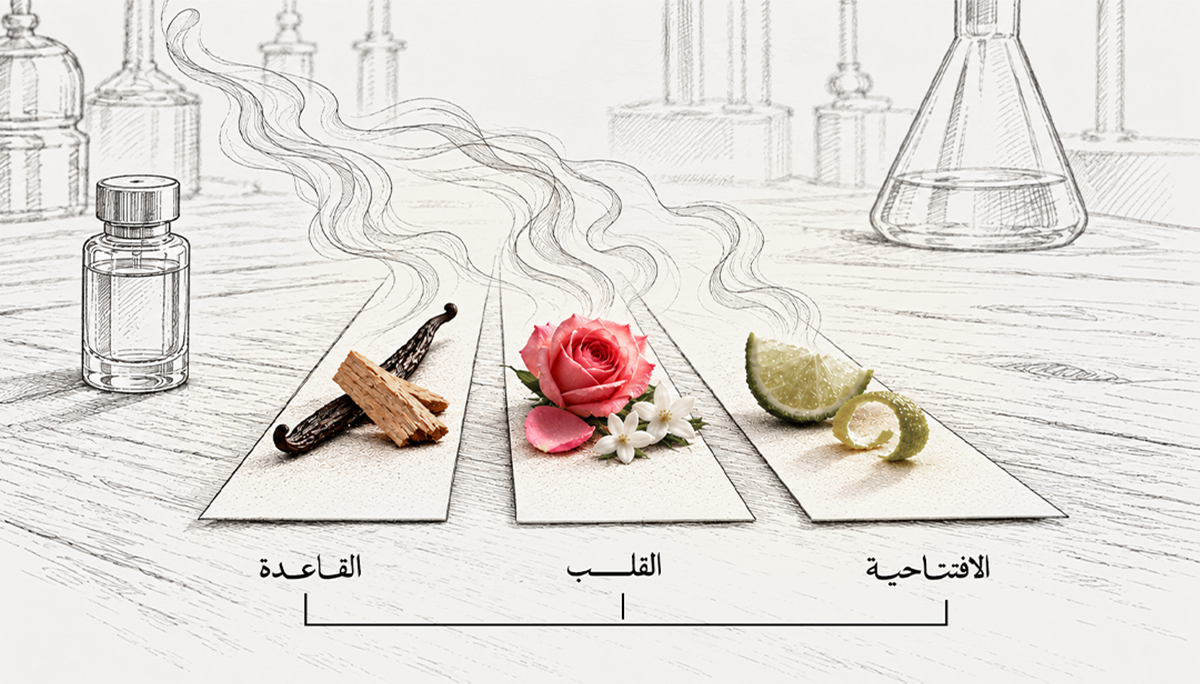
Top notes: the first impression
Top notes introduce the fragrance.
Depending on the composition, they may include citrus, light fruit, herbs, green facets, or quick spices. They may feel bright, clean, cool, sharp, or lively.
Their purpose is to open the scent and lead into the structure beneath.
Why the opening should not decide the purchase alone
The opening may represent only the first part of the wear.
A citrus start can settle into musk or woods. A bright fruit opening can lead into florals, amber, or spice.
For an office perfume, the dry-down matters because it will remain after the initial freshness has faded.
For evening wear, the opening may seem restrained while the later stages bring more warmth and depth.
Heart notes: the fragrance character
The heart becomes clearer as the top notes recede.
Florals, aromatic herbs, spices, fruit, or softer woods may form this stage. The heart often reveals whether the scent feels airy, powdery, green, warm, clean, or textured.
It is useful because it may represent much of the fragrance experience after the opening.
How to read the heart online
Ask:
- Is the heart floral or aromatic?
- Does it move toward softness or warmth?
- Do spices add clarity or depth?
- Does it continue the opening or change direction?
This helps connect the fragrance to daily wear, work, gifting, or an evening setting.
Base notes: the final trail
Base notes emerge more clearly as the scent settles.
Depending on the fragrance, they may include woods, musk, amber, vanilla, patchouli, incense, leather, or other slower-developing facets.
The base does not erase the earlier stages. It holds traces of them. A woody dry-down may still carry a floral softness, while musk may retain some brightness from the opening.
Why base notes matter before buying
The base is often closest to the scent you remember later.
If you are looking for a fragrance for long occasions, repeated daily wear, or evening use, the dry-down deserves more attention than the first impression alone.

Does the top note disappear completely?
It usually recedes rather than vanishing in a sharp break.
A citrus opening may no longer smell distinctly citrus after some time, yet its brightness can remain part of the balance around the heart and base.
The fading of the opening is therefore not proof of weak performance. It is part of normal fragrance evolution.
How perfume notes relate to fragrance families
A fragrance family describes the overall direction. Notes explain how the scent moves within it.
Floral
A floral perfume may open with citrus, reveal a floral heart, and settle into musk, woods, or amber.
Woody
A woody fragrance may begin fresh or spicy, then develop through sandalwood, cedar, patchouli, vetiver, or other woody facets.
Amber or oriental
An amber fragrance may open with spice or citrus, move through florals or resins, and settle into amber, vanilla, woods, or musk.
Citrus or fresh
A fresh perfume may begin with lemon, bergamot, grapefruit, or green notes, then move toward an aromatic heart and a musky or woody base.
A single note cannot explain the complete fragrance. A family alone cannot explain its full timeline.
Choosing perfume notes by use
For daily fragrance and office wear
Pay close attention to the heart and base.
A fresh opening may feel ideal for work, but a sweeter or warmer base can become more noticeable later in an enclosed space.
Look for a balanced evolution that feels appropriate at close distance and in air-conditioned interiors.
For evening fragrance and occasions
The base may carry more weight in the decision.
Woods, amber, musk, incense, leather, or warmer notes often appear in evening-oriented dry-downs, but their presence does not automatically mean the scent is heavy.
Balance between the layers matters more than one material.
For perfume gifts
The opening may be easy to appreciate quickly, but gifting becomes more thoughtful when you consider the settled scent.
Ask whether the recipient usually prefers:
- Musky dry-downs.
- Woody bases.
- Warm amber directions.
- Clean, quiet finishes.
- Daytime or evening fragrance.
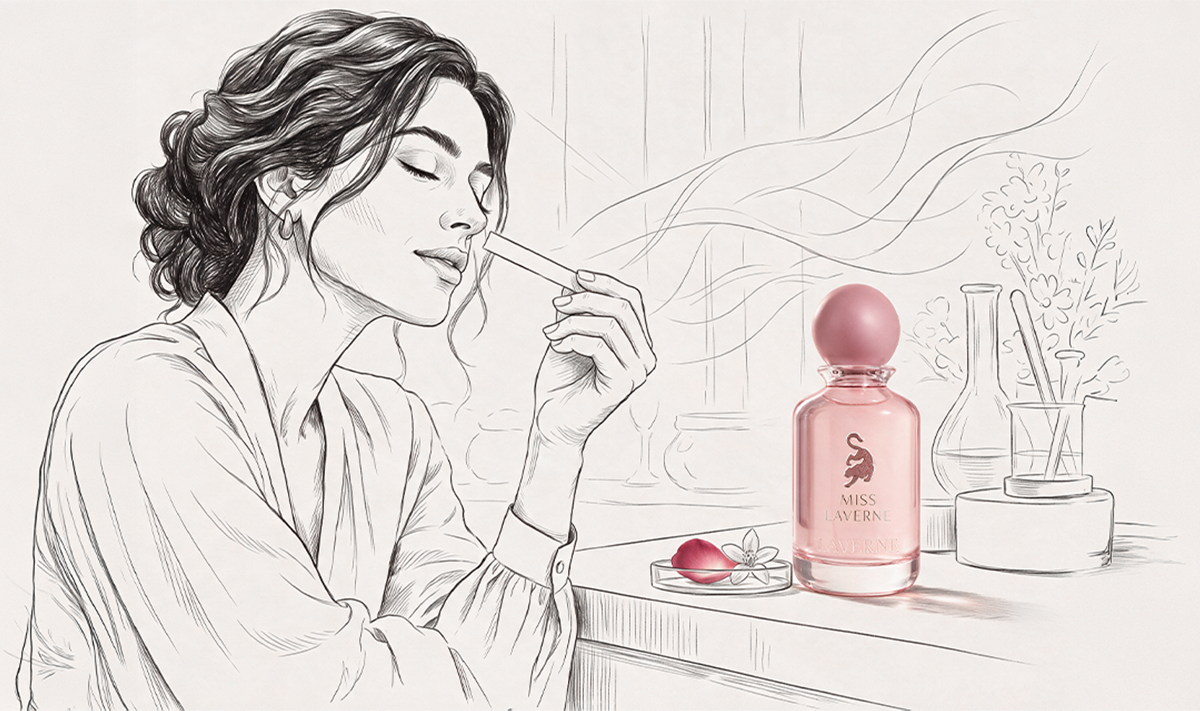
Skin, blotter, and fabric
A blotter helps show the structure without direct interaction with skin.
On skin, warmth and skin chemistry can change how quickly certain facets emerge and how close the scent feels.
Fabric may retain some notes differently and may not show the same transitions as skin.
A practical testing method is:
- Use a blotter to understand the direction.
- Test the most relevant option on skin.
- Wait for the heart and base.
- Avoid rubbing the wrists together.
- Limit the number of perfumes tested in one session.
Common mistakes when reading perfume notes
Judging the fragrance in the first minutes
Why it happens: The opening appears immediately.
Risk: The buyer misses the scent that will remain.
Do instead: Wait until the heart becomes clear.
Expecting all listed notes to be equally obvious
Why it happens: Notes appear as an equal list on the page.
Risk: The buyer searches for each material separately.
Do instead: Read the overall accord and movement.
Treating notes as isolated ingredients
Why it happens: Product descriptions separate the layers visually.
Risk: The relationship between the notes is ignored.
Do instead: Read the pyramid as one composition.
Ignoring Saudi Arabia’s warm weather
Why it happens: The shopper compares with a review from another climate.
Risk: The pace and perceived closeness may differ.
Do instead: Evaluate the scent in a setting close to real use.
Confusing base notes with a performance promise
Base notes explain the final scent direction. They do not guarantee a specific longevity or projection. Performance varies with formula, skin, weather, and application.
A practical comparison method
Step 1: Define the time of use
Brief daytime wear, office, full-day use, or extended evening?
Step 2: Define the layer that matters
Do you care most about the opening, settled character, or final trail?
Step 3: Choose one fragrance family
Comparing within one direction produces a clearer result.
Step 4: Read the full pyramid
Do not reject or select a perfume because of one note.
Step 5: Narrow the options
Compare two or three scents rather than many unrelated choices.
Step 6: Test when uncertainty remains
Use a discovery size or set when available, especially if the base moves beyond your usual preference.
Who is this framework for?
It is helpful for:
- First-time online perfume shoppers.
- Anyone surprised by a fragrance changing on skin.
- Shoppers choosing a scent for long occasions.
- People comparing daily and evening perfume.
- Anyone selecting a fragrance gift.
More care is needed if the wearer has a known sensitivity to fragrance ingredients. Review official product information and seek appropriate specialist guidance where needed.
The method also depends on the product page providing confirmed note information.
Where to begin within LAVERNE
Begin with the fragrance page and choose by time and feeling before product name.
Read the top notes to understand the introduction, the heart to understand the character, and the base to imagine the final trace.
Understanding perfume notes cannot make every skin experience identical, but it can make the decision more informed and reduce first-spray assumptions.
Shop online in Saudi Arabia with a clearer direction, and choose the scent that fits your day.
FAQs
What are perfume notes?
Perfume notes describe how a fragrance develops: top notes appear first, heart notes form the main character, and base notes shape the final dry-down.
What is the difference between top and base notes?
Top notes create the opening impression. Base notes appear later and contribute strongly to the scent that remains after the opening has softened.
Why does perfume smell different after a few hours?
Different parts of the composition become noticeable at different stages. The opening recedes, the heart settles, and the base becomes clearer.
Does the top note disappear completely?
It usually recedes and blends into the later stages. Some of its effect may remain within the overall balance.
How does warm weather affect perfume notes?
Warm conditions may make the opening feel more immediate and the transition seem faster. Skin, humidity, application, and indoor cooling also influence perception.
Do base notes determine longevity?
Base notes contribute to the dry-down, but they do not guarantee a particular wear time. The full composition and wearing conditions matter.
How do I choose a perfume online by its notes?
Define the use, read the full notes pyramid, compare within one fragrance family, and consider a discovery format when available.