
Fragrance Families Guide: Floral, Woody, Amber, and Fresh
Online perfume shopping often begins with too many tabs open and too little clarity. One fragrance is described as floral, another as woody, and another as fresh amber. Without testing them in person, those labels can feel more confusing than helpful.
Understanding fragrance families gives you a practical starting point. It does not replace testing or personal preference, but it helps you narrow the field before comparing names, prices, or packaging.
For shoppers in Saudi Arabia, the decision also needs to account for warm outdoor weather, cars, workspaces, air-conditioned interiors, evening gatherings, and gifting. A perfume is experienced across all these settings, not in one fixed environment.
Why do people search for fragrance families?
The search usually begins because the shopper wants structure.
They may know that they enjoy a certain perfume but not understand why. They may be buying a perfume gift, looking for a daily fragrance, or comparing several options that sound similar.
Fragrance families give a broad map. They help separate bright and fresh directions from soft florals, grounded woods, and warmer amber compositions.
A family is a starting point, not the whole scent
A woody fragrance may open with citrus. A floral scent may settle into musk or amber. A fresh fragrance may develop a warm base.
Use the family to narrow your options, then use the note structure and dry-down to understand the complete direction.
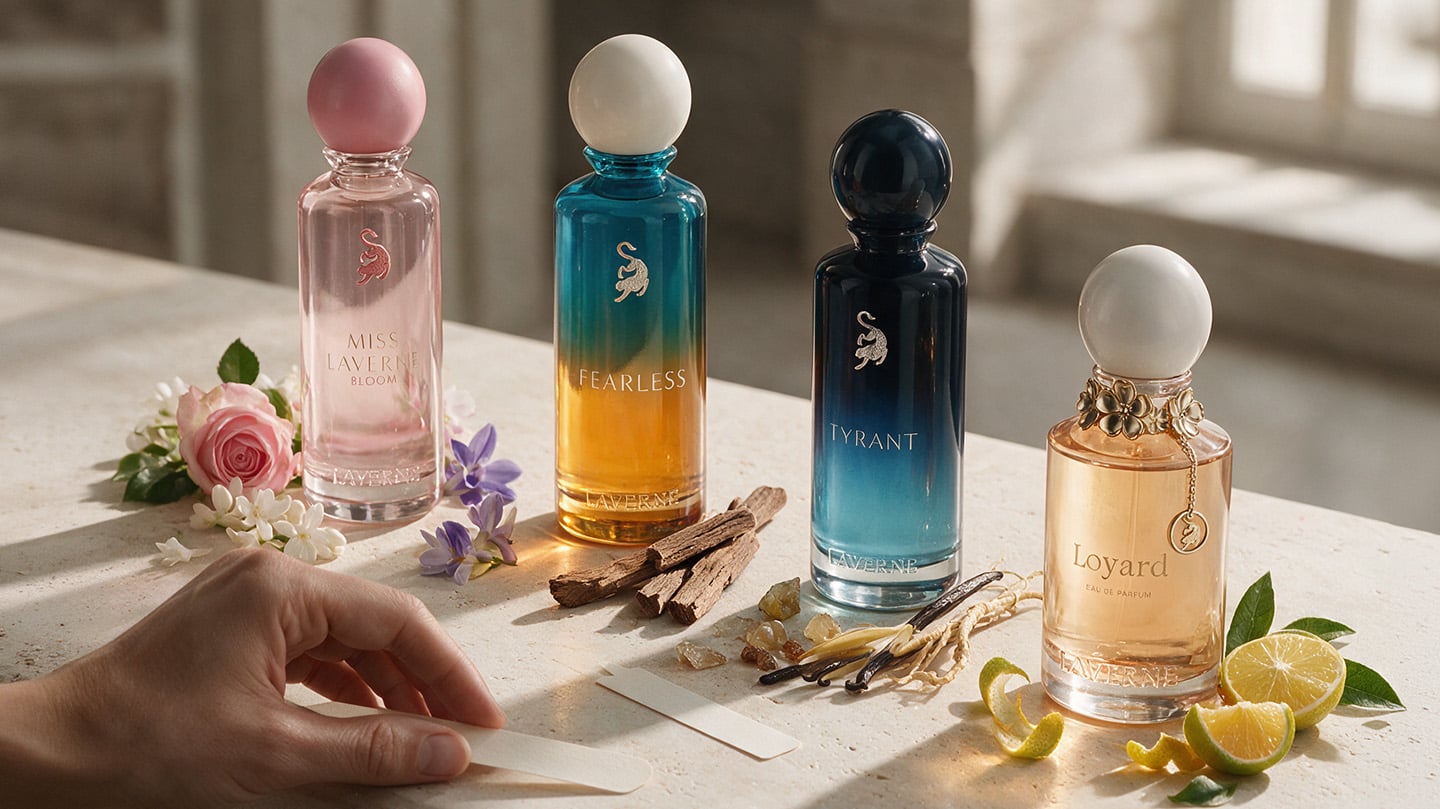
When is choosing by family useful?
This method is useful when you are:
- Buying perfume online for the first time.
- Looking for a daily fragrance in Saudi Arabia.
- Choosing an office perfume.
- Searching for an evening scent.
- Buying a perfume gift.
- Comparing several unfamiliar fragrances.
- Trying to understand your personal scent preference.
Quick choice versus considered choice
A quick choice often starts with a product name, reputation, or bottle image.
A considered choice starts with use. Where will you wear it? Do you want a soft trail or a clearer presence? Does the scent need to work during the day, in air-conditioned spaces, or mainly for evening gatherings?
A fragrance name cannot answer those questions. Its family and confirmed notes can.
How to read a fragrance before ordering online
A fragrance description becomes easier to understand when you read it in stages.
Top notes
Top notes create the opening impression. Citrus, fresh fruit, herbs, and light spices often appear here.
They are important, but they may last for only part of the scent experience. A fresh opening can still move into a warm amber or woody base.
Heart notes
The heart develops after the opening settles. Florals, aromatic herbs, spices, fruits, or woods may shape this stage.
This is often where the fragrance mood becomes clearer: soft, green, powdery, warm, clean, or textured.
Base notes and dry-down
The base is the part that remains. Musk, woods, amber, vanilla, incense, leather, and other deeper materials may appear here.
When comparing a daily perfume with an evening fragrance, the base can be more useful than the opening. It shows where the scent is moving, not only how it begins.
The main fragrance families
Four families provide a clear entry point, although many perfumes combine two or more directions.
Floral fragrances
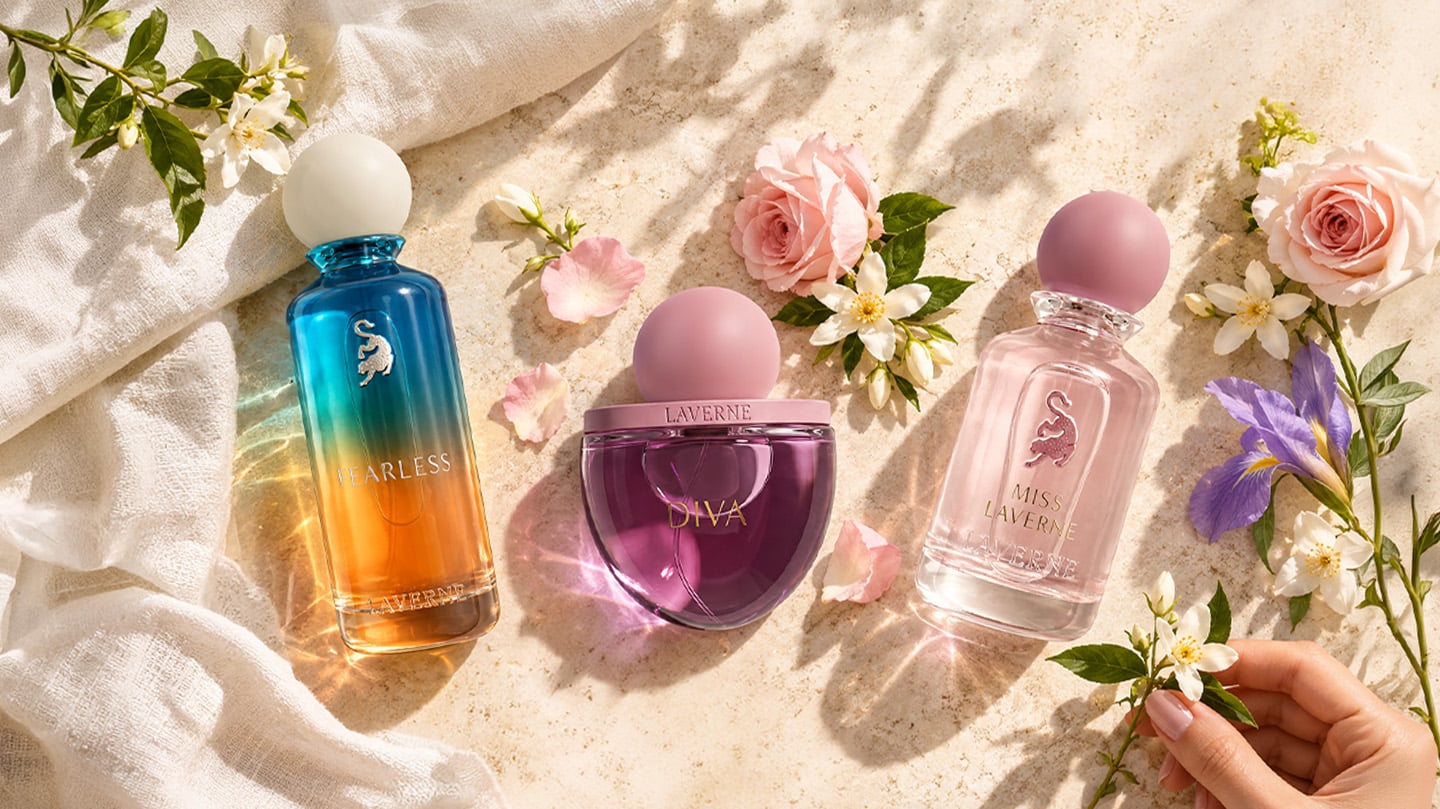
Floral fragrances are built around flowers such as rose, jasmine, orange blossom, iris, peony, or other floral materials.
They can feel airy, powdery, fruity, musky, woody, or warm. “Floral” does not describe one single mood.
May suit: daytime wear, gifting, soft personal scents, and moments that call for a calm presence.
Check before buying: Is the floral heart transparent or dense? Does the base move toward musk, woods, sweetness, or amber?
Woody fragrances

Woody fragrances may include sandalwood, cedar, patchouli, vetiver, oud, or other woody notes.
They can feel dry, smooth, smoky, aromatic, or warm. Some work naturally for daytime; others are more suited to evening settings.
May suit: work, formal settings, evening wear, or someone who prefers a grounded scent direction.
Check before buying: Is the wood bright and aromatic, or dark and warm? Are leather, smoke, or amber part of the base?
Oriental or amber fragrances

Amber fragrances often combine warmth, spices, vanilla, benzoin, musk, woods, or incense-like facets.
They may feel soft and enveloping, spicy, floral, or sweet depending on the balance.
May suit: evening wear, gatherings, cooler periods, gifting, or anyone who prefers warmth and depth.
Check before buying: How sweet is the composition? Are spices or incense prominent? Will that direction suit repeated wear or a specific occasion?
Citrus or fresh fragrances

Fresh fragrances often include lemon, bergamot, orange, grapefruit, mint, green notes, or aquatic facets.
They tend to create a sense of movement, clarity, or cleanliness, but the base still determines whether the fragrance stays light.
May suit: morning wear, work, travel, summer use, and daily perfume shopping in Saudi Arabia.
Check before buying: What follows the fresh opening? A woody or amber base can make the fragrance more suitable for day-to-evening wear.
What about aromatic, gourmand, fruity, and leather families?
These families may stand alone or overlap with the four main directions.
- Aromatic: built around herbs such as lavender, sage, rosemary, or basil.
- Gourmand: shaped by vanilla, caramel, coffee, almond, chocolate, or other edible-feeling notes.
- Fruity: focused on apple, pear, berries, peach, pineapple, or similar fruit notes.
- Leather: built around a dry, smooth, smoky, or darker leather effect.
- Fougère: often combines lavender, herbs, coumarin, woods, and moss-like facets.
- Chypre: traditionally balances citrus, florals, patchouli, woods, or moss-like depth.
You do not need to identify every detail before shopping. Start with the dominant direction.
Can a perfume belong to more than one family?
Yes. Many fragrances are described as:
- Floral woody.
- Citrus aromatic.
- Amber floral.
- Woody amber.
- Floral fruity.
This overlap creates movement. A perfume may begin fresh, develop a floral heart, and settle into woods.
The mistake is assuming that a fragrance must remain inside one strict category.
Matching fragrance families to use
Daily wear and office perfume
Fresh, citrus, aromatic, musky, and soft floral directions may provide a useful starting point.
For air-conditioned spaces and close work environments, consider how the fragrance feels at short distance. A balanced dry-down may matter more than a dramatic opening.
Evening fragrance and occasions
Woody, amber, spicy, incense-leaning, leather, or warm floral compositions may fit slower evening settings.
The goal is not maximum projection. It is a scent that feels aligned with the time, space, and mood.
Perfume gifts
Do not begin with gender alone. Ask:
- Does the recipient wear perfume daily?
- Do they prefer clean or warm scents?
- Are they drawn to florals, woods, freshness, or sweetness?
- Is the gift for work, evening, or general use?
When their preference is unclear, discovery sets or smaller formats may reduce uncertainty if available.
Fragrance families and Saudi weather
There is no single family that works for every person or setting.
Warm weather, air conditioning, skin chemistry, fabric, application, and the number of sprays can all affect how a fragrance is perceived.
Fresh and aromatic openings may feel clear during warm daytime movement. In cooled interiors, the base may become more noticeable.
This is why a “summer perfume” should not be chosen from the opening alone. Read the heart and dry-down as well.
Common mistakes when choosing a fragrance family
Choosing by name alone
Why it happens: Names are easier to remember than note structures.
Risk: The scent may not match the expectation created by the name.
Do instead: Review the family and confirmed notes.
Comparing too many families at once
Why it happens: Online stores display many directions together.
Risk: Comparison becomes less useful.
Do instead: Choose one family and compare within it first.
Ignoring the dry-down
Why it happens: The opening receives the most attention.
Risk: You may enjoy the first stage but not the scent that remains.
Do instead: Read the base notes and test beyond the opening when possible.
Ignoring the setting
Why it happens: Shoppers think about weather but not distance or indoor space.
Risk: A scent may work outdoors but feel too present in a meeting room.
Do instead: Consider warm weather and air-conditioned spaces together.
Buying a full bottle while still uncertain
Why it happens: The shopper wants to end the decision quickly.
Risk: Committing to the wrong direction.
Do instead: Use a discovery format when available.
A practical fragrance-family framework
Step 1: Set the time
Daily wear, office, evening, occasion, or gift?
Step 2: Define the mood
Light, clean, soft, warm, grounded, or deep?
Step 3: Choose one family
- Light and moving: fresh or aromatic.
- Soft and close: floral or musky.
- Grounded: woody.
- Warm and slow: amber or oriental.
Step 4: Read confirmed notes
Look at the opening, heart, and base when the information is available.
Step 5: Compare a small group
Two or three options are usually enough for the first comparison.
Step 6: Test when needed
A blotter shows the structure differently from skin. Skin chemistry may change the scent experience, while fabric may hold some notes differently.
Who is this method suitable for?
It is useful for:
- First-time online perfume shoppers.
- Anyone comparing several perfumes.
- People choosing a daily or office fragrance.
- Shoppers looking for a perfume gift.
- Anyone building a personal scent direction.
More care is needed when the wearer has known sensitivity to fragrance ingredients. Review official product information and seek appropriate specialist guidance when necessary.
The framework is also less useful when a product page does not provide a clear description or confirmed notes.
Where to begin within LAVERNE
Begin from the fragrance page and choose by use and feeling before product name.
For daily fragrance, explore fresh, aromatic, soft floral, or musky directions. For evening wear, consider woody, amber, spicy, or incense-leaning compositions based on confirmed product information.
Understanding fragrance families does not make the choice automatic. It removes unrelated options and gives the decision a quieter shape.
Shop online in Saudi Arabia with a clearer direction, and choose the scent that feels closest to your presence.
FAQ Section
What are the main fragrance families?
Useful starting families include floral, woody, oriental or amber, and citrus or fresh. Other families include aromatic, gourmand, fruity, leather, fougère, and chypre.
How do I know which fragrance family suits me?
Start with time and mood. Fresh and aromatic directions may suit daily movement, floral and musky scents may feel softer, while woody and amber directions often offer more warmth.
What is the difference between floral and woody perfume?
Floral perfume is shaped around flower notes and may feel airy, powdery, fruity, or warm. Woody perfume focuses on materials such as sandalwood, cedar, patchouli, or vetiver.
Can one perfume belong to several families?
Yes. A perfume may be floral woody, citrus aromatic, amber floral, or woody amber. The dominant facet gives the main direction.
Which fragrance family suits warm weather in Saudi Arabia?
Fresh, citrus, aquatic, and aromatic directions may be useful starting points. The heart, base, application, and indoor setting should also be considered.
How can I choose perfume online without testing it?
Read the family, confirmed notes, use case, and dry-down description. Compare only a few options and use discovery formats when available.
Do fragrance families determine gender?
No. The same family can appear in masculine, feminine, and unisex compositions. Mood and personal preference are more useful than the label alone.